Whistleblower deadlines cheat sheet: 30 days to 10 years
Verified against official sources:
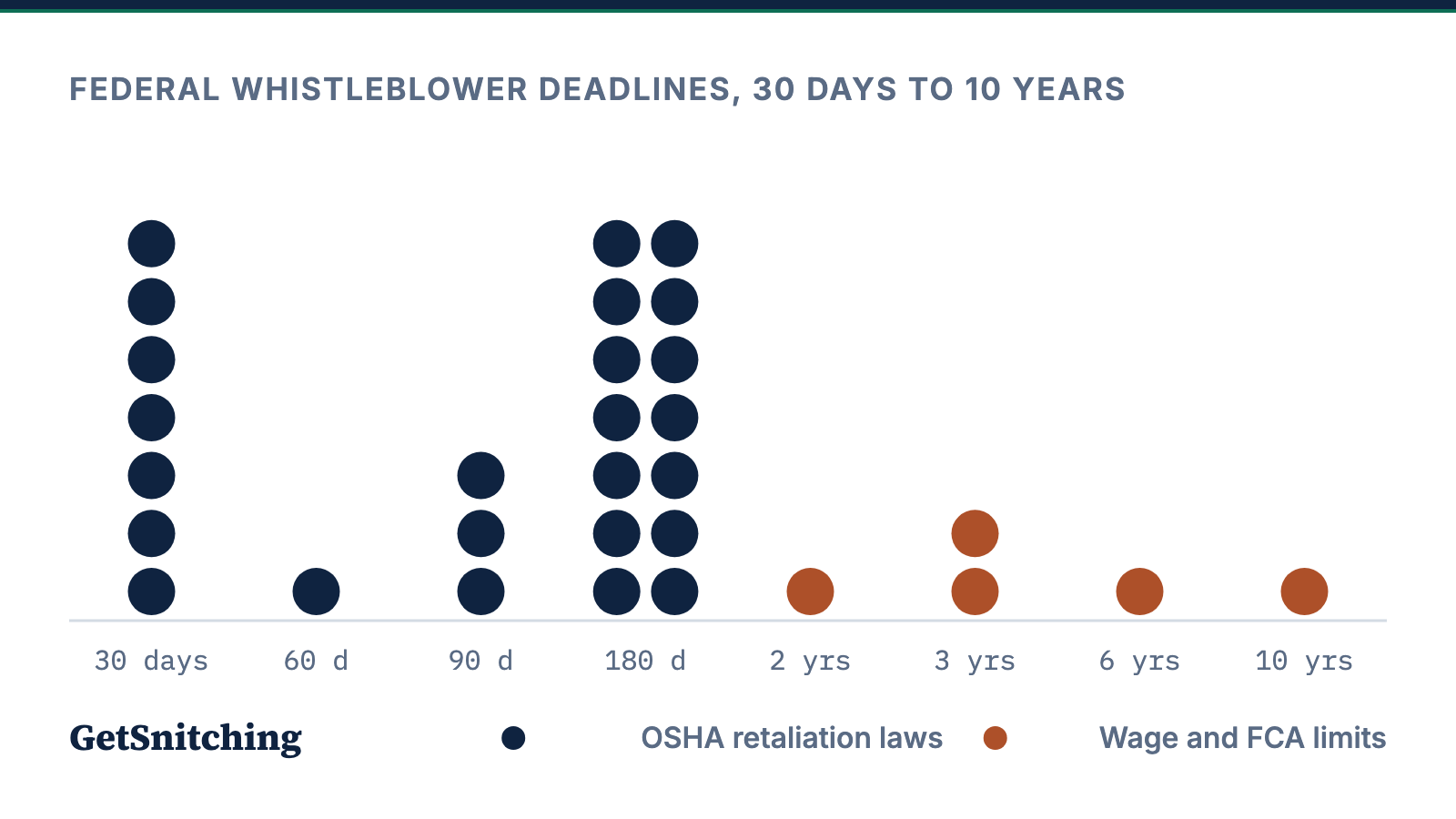
Most whistleblower cases that fail do not fail on the facts. They fail on a deadline. These are the key federal deadlines, each from the statute or OSHA’s official chart. State laws add their own; see whistleblower laws by state.
Retaliation complaints with OSHA
OSHA enforces 25 whistleblower laws, each with its own deadline counted from the retaliation:
- 30 days: OSH Act Section 11(c) (workplace safety) and the six pollution laws: Clean Air Act, Clean Water Act, Safe Drinking Water Act, CERCLA, RCRA, and TSCA.
- 60 days: International Safe Container Act.
- 90 days: AIR21 (aviation), Anti-Money Laundering Act, and AHERA (asbestos in schools).
- 180 days: Sarbanes-Oxley, STAA (trucking), FRSA (railroads), ERA (nuclear), Taxpayer First Act, CFPA, CPSIA, FSMA, MAP-21, ACA, CAARA, NTSSA, PSIA, and the Seaman’s Protection Act.
OSHA’s chart notes that extensions are possible only in limited circumstances. Do not count on one.
False Claims Act
- Qui tam case: 6 years from the violation, or 3 years from when the responsible federal official knew or should have known, but never more than 10 years. See the statute of limitations.
- Retaliation: 3 years from the retaliation. See False Claims Act retaliation.
Unpaid wages (FLSA)
- Lawsuit for unpaid minimum wage or overtime: 2 years, or 3 if the violation was willful. See can you sue for unpaid wages?
Safety complaints
- OSHA citation: OSHA cannot cite a violation more than 6 months old, so report hazards promptly.
The one rule that matters
When the same facts fit more than one law, the shortest deadline controls if you want to keep every claim. A truck driver fired for reporting both a safety defect and falsified logs might have 30 days under Section 11(c) and 180 under STAA: file within 30.
Not legal advice
GetSnitching explains programs and processes in plain English from official sources. Whistleblower and reporting decisions can carry real legal risk. For advice about your situation, talk to a licensed attorney. Many whistleblower attorneys offer free consultations.