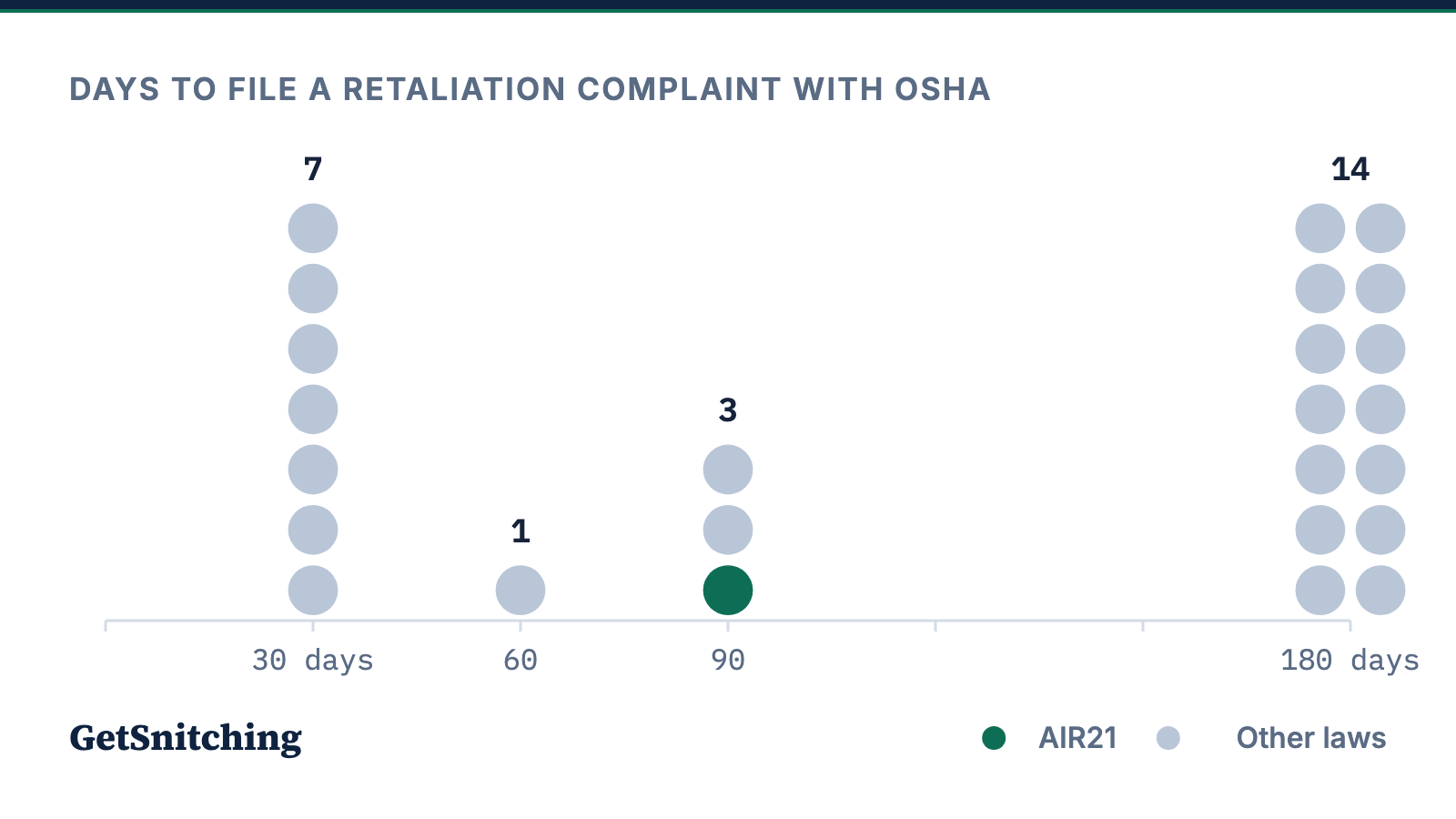
AIR21 aviation whistleblower protection: 90 days to file with OSHA
Verified against official sources:
AIR21 protects the people who keep aircraft safe: mechanics, pilots, flight attendants, dispatchers, inspectors, engineers, and the employees of the long chain of contractors and parts suppliers behind every airline. If you reported a safety problem to the FAA or to your employer and were punished for it, AIR21 is the federal law built for your situation.
Who is covered
The statute reaches air carriers holding certificates under 49 U.S.C. 44705, aircraft manufacturers and designers holding certificates under 49 U.S.C. 44704, and the contractors, subcontractors, and suppliers of those certificate holders. That last category matters: a repair station technician or a parts-supplier quality inspector is covered even though they never set foot on an airline payroll.
Protected activity
You are protected for providing information about any violation or alleged violation of an FAA order, regulation, or standard, or of any other federal law relating to aviation safety. That includes reports to the FAA, internal reports to your managers, filing or testifying in a proceeding, and assisting an investigation. Your belief has to be reasonable, but you do not have to be proven right.
The 90-day deadline
You must file with OSHA within 90 days of the retaliation. Aviation employers often frame the adverse action as a routine disciplinary or medical matter, which can make people hesitate. Do not wait to see how an internal grievance plays out; a union grievance does not stop the federal clock.
How the case moves
AIR21 uses the “contributing factor” causation standard, which is friendlier to employees than the “but for” test in Section 11(c). Once you show your safety report contributed to the decision, the employer has to prove by clear and convincing evidence it would have taken the same action anyway. If OSHA finds merit, it can order preliminary reinstatement. You can request that OSHA issue findings on the record so far once 60 days have passed without a decision. Either party has 30 days to object to OSHA’s findings and request a hearing before a Department of Labor administrative law judge.
One important difference from most newer statutes: OSHA’s chart shows no kick-out right for AIR21. You cannot move the case to federal district court if the Department of Labor is slow. Your case stays within the Labor Department’s process, through the administrative law judge and the Administrative Review Board.
Remedies
Available remedies are reinstatement, back pay, and compensatory damages, plus attorney’s fees and costs. Punitive damages are not available.
No reward, but there may be another path
AIR21 does not pay a reward. If the safety problem was also concealed from investors of a publicly traded manufacturer, the SEC whistleblower program may apply. For how retaliation laws stack, see our retaliation protections guide.
Other laws on the same 90-day clock
If your facts also touch one of these, the deadline is the same, but coverage and remedies differ.
Related reading
Compare all 25 OSHA whistleblower laws
Not legal advice
GetSnitching explains programs and processes in plain English from official sources. Whistleblower and reporting decisions can carry real legal risk. For advice about your situation, talk to a licensed attorney. Many whistleblower attorneys offer free consultations.
Official sources
Cite this page