RCRA (Solid Waste Disposal Act) whistleblower protection: 30 days
Verified against official sources:
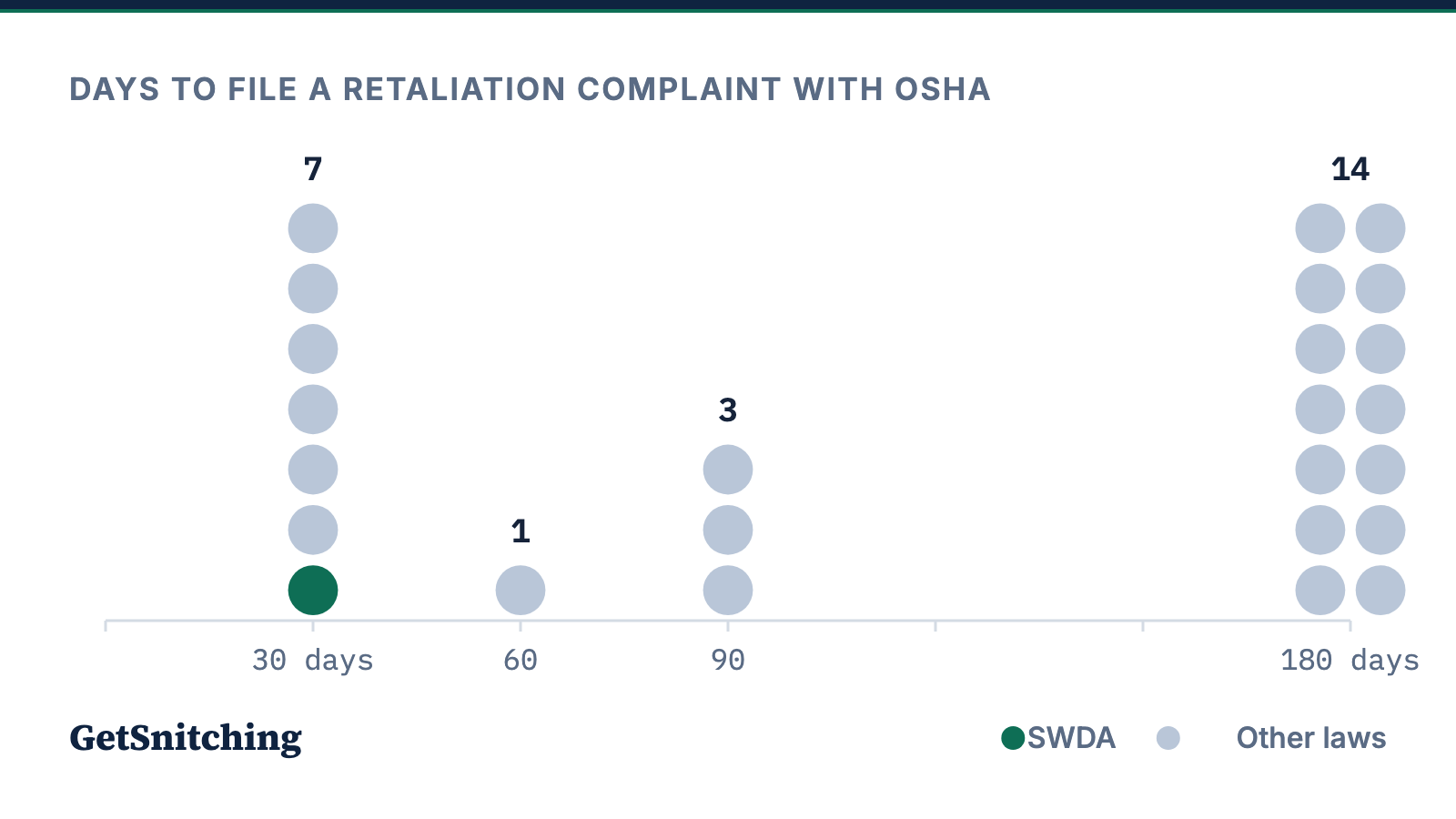
The Solid Waste Disposal Act, best known by the name of its major amendment, the Resource Conservation and Recovery Act (RCRA), governs how solid and hazardous waste is treated, stored, and disposed of at active and future sites. OSHA’s chart notes it covers liquids, contained gaseous wastes, semi-solid wastes, and sludges, not just solid trash. Employees who report violations, such as drums stored past their permitted time, waste mislabeled to avoid hazardous-waste rules, or loads dumped at an unpermitted site, are protected from retaliation.
The 30-day deadline
You have only 30 days from the retaliatory act to file with OSHA. Mark the date of the firing, demotion, or discipline, and file well before day 30.
Who is covered
RCRA applies to persons generally. OSHA’s environmental desk aid notes that RCRA waives federal sovereign immunity, so employees at federal facilities, which generate significant hazardous waste, can bring claims. RCRA also protects an authorized representative of employees, such as a union representative, along with employees themselves.
Protected activity and causation
You are protected for reporting potential violations relating to the treatment, storage, and disposal of solid and hazardous waste, whether to your employer, EPA, or your state’s waste program, and for testifying or participating in proceedings. RCRA uses the “motivating factor” causation standard.
Procedure and remedies
OSHA investigates first. You can ask for findings on the record after 30 days, and either side has 30 days after OSHA’s findings to request a hearing before a Department of Labor administrative law judge. There is no right to move the case to federal court, and OSHA cannot order preliminary reinstatement under RCRA. Remedies are reinstatement, back pay, and compensatory damages, plus fees and costs. Punitive damages are not available.
There is no RCRA bounty
You will find summaries online claiming RCRA lets EPA pay informants up to $10,000. We checked the statute: no section of RCRA’s chapter of the U.S. Code (42 U.S.C. Chapter 82) contains an informant award. The two environmental laws that do are the Clean Air Act and CERCLA, the Superfund law. If your hazardous waste report also involves a criminal CERCLA violation, such as failing to report a release, that award can come into play. See our EPA whistleblower page for the full picture.
Hazardous waste and federal contracts
If the company handling waste is doing it under a federal contract, at a military base or a Department of Energy site for example, and it billed for proper disposal it never performed, that can support a qui tam False Claims Act case that pays the whistleblower a share of the recovery. The OSHA program page covers the retaliation filing.
Other laws on the same 30-day clock
If your facts also touch one of these, the deadline is the same, but coverage and remedies differ.
Related reading
Compare all 25 OSHA whistleblower laws
Not legal advice
GetSnitching explains programs and processes in plain English from official sources. Whistleblower and reporting decisions can carry real legal risk. For advice about your situation, talk to a licensed attorney. Many whistleblower attorneys offer free consultations.
Official sources
Cite this page