TSCA whistleblower protection: chemical safety, 30 days, punitive damages
Verified against official sources:
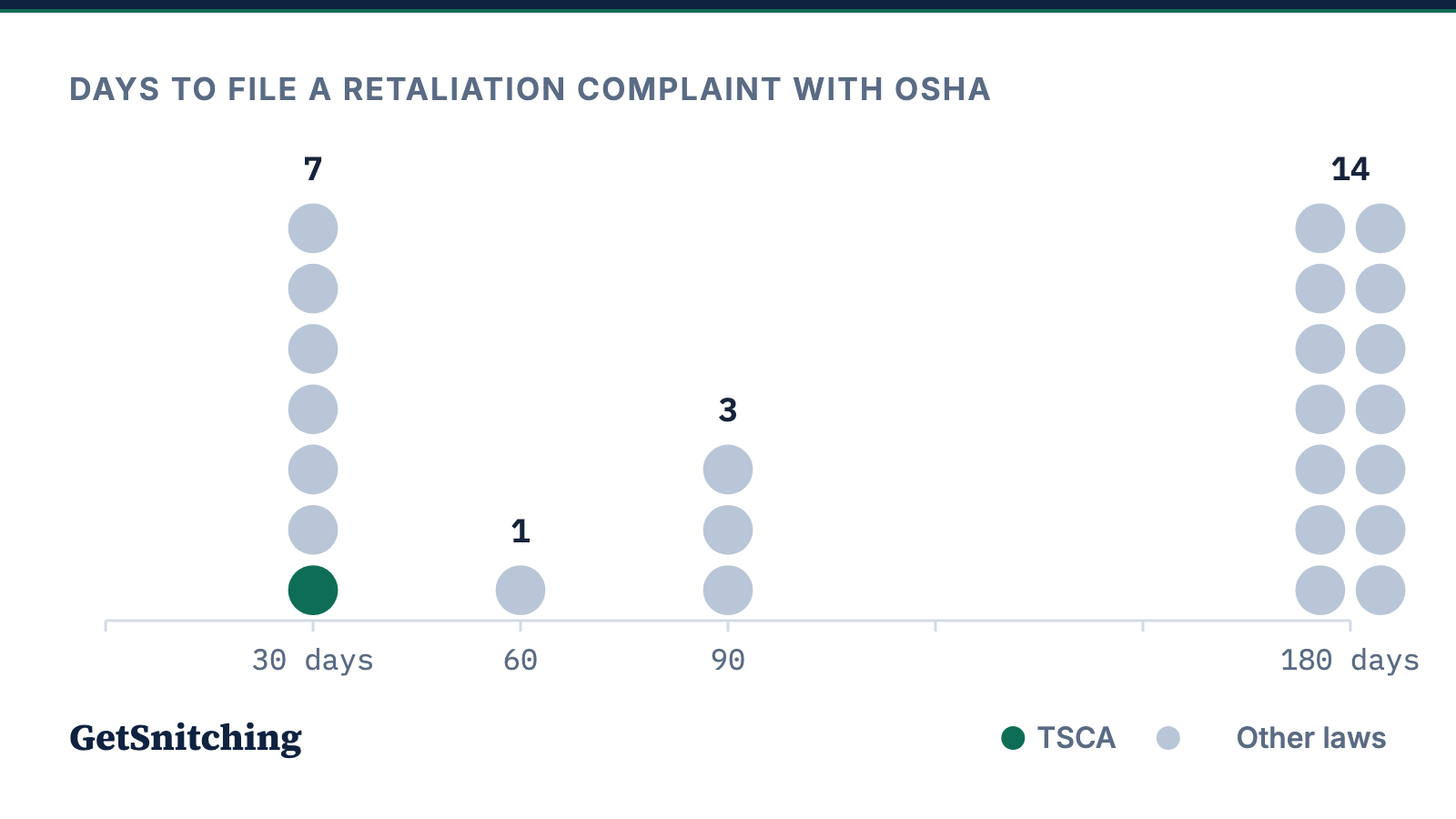
The Toxic Substances Control Act regulates industrial chemicals in U.S. commerce: how they are manufactured, imported, used, and disposed of. OSHA’s chart notes that it supplements the Clean Air Act and the Toxic Release Inventory under the Emergency Planning and Community Right-to-Know Act. Employees who report TSCA violations, such as unreported chemical risks, undisclosed new chemicals, or mishandled substances like PCBs or asbestos, are protected from retaliation.
The 30-day deadline
You have 30 days from the retaliatory act to file with OSHA, the shortest window in federal whistleblower law. TSCA shares it with the other environmental statutes and with OSH Act Section 11(c).
Who is covered, and the federal gap
TSCA applies to employers generally. But OSHA’s environmental desk aid explains that TSCA, like the Clean Water Act, does not waive federal sovereign immunity, so federal employees generally cannot bring a TSCA retaliation claim against a federal agency. Private chemical manufacturers, importers, processors, and distributors are squarely covered.
Protected activity
You are protected for reporting potential violations relating to industrial chemicals, whether to your employer or to EPA, and for testifying or participating in proceedings under the Act. Chemical companies have duties to report to EPA information suggesting a substance presents a substantial risk of injury to health or the environment, and pressure to sit on that kind of information is a classic trigger for a TSCA complaint.
Remedies: punitive damages available
TSCA is one of only two environmental statutes, with the Safe Drinking Water Act, that allow punitive damages. You can also recover reinstatement, back pay, and compensatory damages, plus fees and costs. The causation standard is “motivating factor.”
Procedure
OSHA investigates. You can request findings after 30 days, and either side has 30 days after OSHA’s findings to request a hearing before a Department of Labor administrative law judge. OSHA cannot order preliminary reinstatement under TSCA, and there is no right to take the case to federal district court.
Reporting the chemical risk
TSCA violations can be reported to EPA. There is no TSCA reward provision. If the chemical risk was concealed from investors of a public company, the SEC program may pay for the tip. Our EPA whistleblower page covers environmental reporting generally, and the OSHA program page covers the retaliation filing.
Other laws on the same 30-day clock
If your facts also touch one of these, the deadline is the same, but coverage and remedies differ.
- Clean Air Act (CAA)
- Comprehensive Environmental Response, Compensation, and Liability Act (CERCLA)
- Federal Water Pollution Control Act (Clean Water Act) (FWPCA)
- Section 11(c) of the Occupational Safety and Health Act (OSH Act 11(c))
- Safe Drinking Water Act (SDWA)
- Solid Waste Disposal Act (Resource Conservation and Recovery Act) (SWDA)
Related reading
Compare all 25 OSHA whistleblower laws
Not legal advice
GetSnitching explains programs and processes in plain English from official sources. Whistleblower and reporting decisions can carry real legal risk. For advice about your situation, talk to a licensed attorney. Many whistleblower attorneys offer free consultations.
Official sources
Cite this page