Safe Drinking Water Act whistleblower protection: 30 days, punitive damages
Verified against official sources:
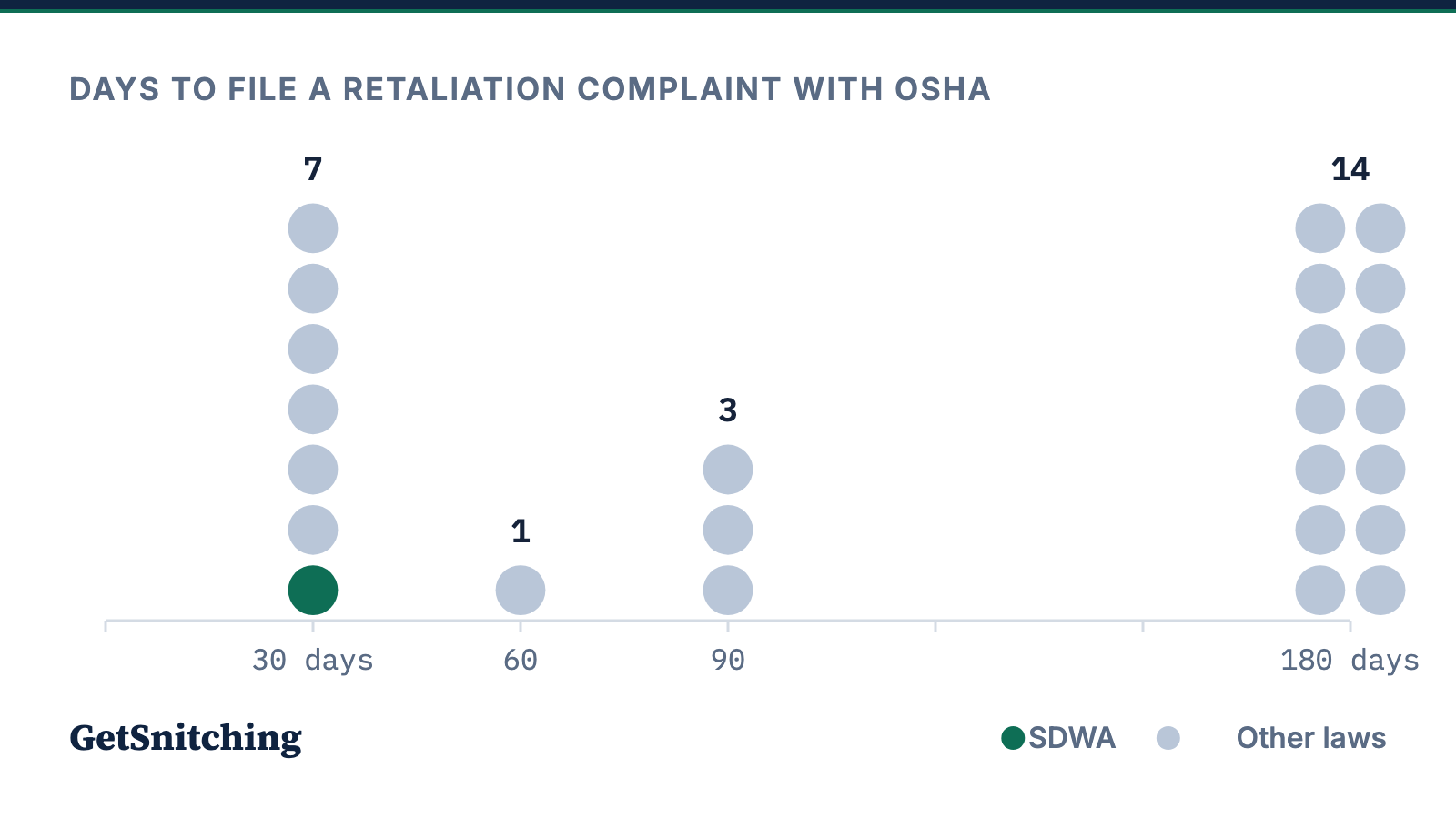
The Safe Drinking Water Act protects the water that comes out of your tap. Its whistleblower provision protects the employees who keep that water safe: water treatment operators, lab technicians who run compliance samples, utility field crews, and the contractors who work on public water systems. OSHA’s chart notes the Act’s reach also includes plumbing requirements and schools.
The 30-day clock
You must file a retaliation complaint with OSHA within 30 days of the adverse action. Water utilities are often public agencies with civil service procedures and union grievances, and it is easy to spend those 30 days in an internal process. The federal deadline does not wait.
Who is covered
The SDWA applies to employers generally, and it reaches government employers. OSHA’s environmental desk aid notes that the SDWA waives federal sovereign immunity, which matters because so many water systems are run by municipalities, states, and federal facilities such as military bases.
Protected activity
You are protected for reporting potential violations relating to waters designed for drinking, from surface or underground sources, whether you report to your employer, EPA, or your state’s drinking water program. Common examples include reporting falsified or skipped lead and copper sampling, treatment failures concealed from regulators, and failure to issue required public notices after a violation.
Remedies: one of only two pollution laws with punitive damages
Under the SDWA you can recover reinstatement, back pay, compensatory damages, attorney’s fees, and, unusually, punitive damages. Among the six environmental statutes, only the SDWA and TSCA allow punitive damages. The causation standard is “motivating factor.”
Procedure
OSHA investigates first. You can request findings after 30 days. Either side then has 30 days to request a hearing before a Department of Labor administrative law judge. OSHA cannot order preliminary reinstatement under the SDWA, and there is no right to take the case to federal district court.
Report the water problem
Drinking water violations can be reported to EPA through its ECHO portal (how to report an environmental violation) or to your state drinking water program. EPA does not pay rewards for drinking water tips. Our EPA whistleblower page covers reporting, and the OSHA program page walks through the retaliation filing.
Other laws on the same 30-day clock
If your facts also touch one of these, the deadline is the same, but coverage and remedies differ.
- Clean Air Act (CAA)
- Comprehensive Environmental Response, Compensation, and Liability Act (CERCLA)
- Federal Water Pollution Control Act (Clean Water Act) (FWPCA)
- Section 11(c) of the Occupational Safety and Health Act (OSH Act 11(c))
- Solid Waste Disposal Act (Resource Conservation and Recovery Act) (SWDA)
- Toxic Substances Control Act (TSCA)
Related reading
Compare all 25 OSHA whistleblower laws
Not legal advice
GetSnitching explains programs and processes in plain English from official sources. Whistleblower and reporting decisions can carry real legal risk. For advice about your situation, talk to a licensed attorney. Many whistleblower attorneys offer free consultations.
Official sources
Cite this page