STAA trucking whistleblower protection: 180 days, refusal to drive
Verified against official sources:
STAA is the trucker’s whistleblower law, and it is one of the most heavily used statutes in OSHA’s program. It protects commercial drivers who refuse to drive in unsafe conditions or who report safety violations, and it backs that protection with strong remedies.
Who is protected
STAA protects drivers of commercial motor vehicles, including independent contractors while they are personally operating a CMV, and other workers whose jobs directly affect CMV safety or security, such as mechanics and freight handlers. It applies to private-sector employers that own or lease CMVs or assign employees to operate them in commerce. It does not apply to the federal government, including the Postal Service, or to states and their political subdivisions, so a city bus driver or a public works truck driver needs a different law.
What is protected
STAA covers three main kinds of conduct. First, filing or reporting a complaint about a violation of a commercial motor vehicle safety or security rule, internally or to a government agency. Second, refusing to operate a vehicle when doing so would violate a federal safety or security rule, or when you have a reasonable apprehension of serious injury to yourself or the public because of the vehicle’s hazardous condition. Third, accurately reporting your hours on duty. Pressure to falsify logs or run over hours is one of the most common fact patterns in STAA cases.
The 180-day deadline
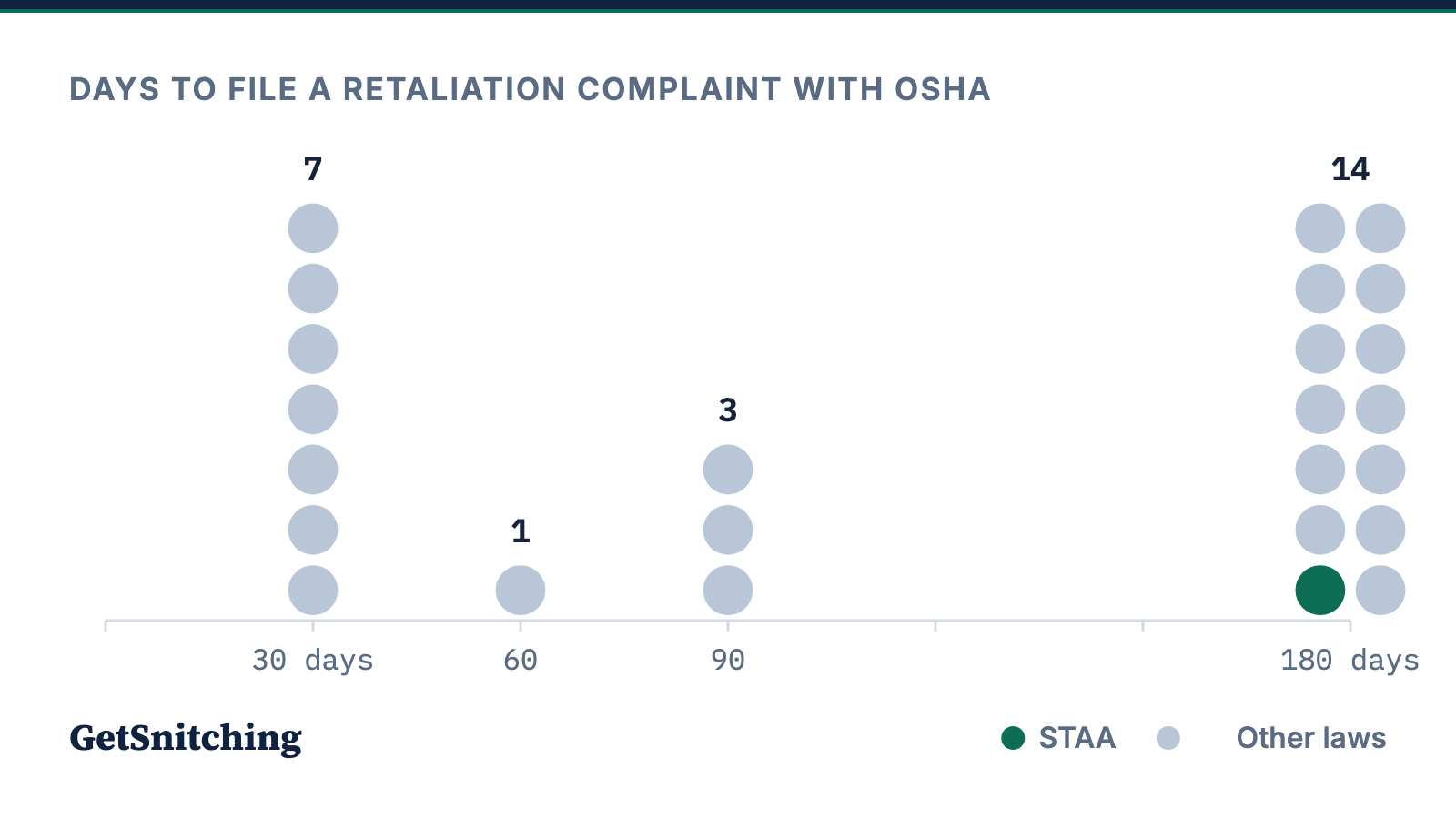
You must file with OSHA within 180 days of the retaliation. Drivers often move on to a new carrier quickly after a firing, and the complaint gets forgotten. It can be filed by phone, online, or in person, and an oral complaint is enough.
Procedure
STAA uses the “contributing factor” causation standard. OSHA can order preliminary reinstatement, which in trucking can mean getting back on the road within months rather than years. You can request findings after 60 days. If there is no final Labor Department decision within 210 days of filing, you can take the case to federal district court. Either side has 30 days to object to OSHA’s findings and request a hearing before an administrative law judge.
Remedies
Reinstatement, back pay, compensatory damages, attorney’s fees, and punitive damages capped at $250,000.
Practical tips
Write down the date, time, truck or trailer number, and the specific defect or rule when you refuse a load or report a problem, and keep copies of your logs. Our OSHA complaint guide covers how to file, and the OSHA program page explains what happens after.
Other laws on the same 180-day clock
If your facts also touch one of these, the deadline is the same, but coverage and remedies differ.
- Affordable Care Act, Section 1558 (Fair Labor Standards Act Section 18C) (ACA)
- Criminal Antitrust Anti-Retaliation Act (CAARA)
- Consumer Financial Protection Act of 2010, Section 1057 (CFPA)
- Consumer Product Safety Improvement Act, Section 219 (CPSIA)
- Energy Reorganization Act of 1974, Section 211 (ERA)
- Federal Railroad Safety Act (FRSA)
- FDA Food Safety Modernization Act, Section 402 (FSMA)
- Moving Ahead for Progress in the 21st Century Act, Section 31307 (MAP-21)
- National Transit Systems Security Act (NTSSA)
- Pipeline Safety Improvement Act (PSIA)
- Sarbanes-Oxley Act of 2002, Section 806 (SOX)
- Seaman's Protection Act (SPA)
- Taxpayer First Act (TFA)
Related reading
Compare all 25 OSHA whistleblower laws
Not legal advice
GetSnitching explains programs and processes in plain English from official sources. Whistleblower and reporting decisions can carry real legal risk. For advice about your situation, talk to a licensed attorney. Many whistleblower attorneys offer free consultations.
Official sources
Cite this page