Seaman's Protection Act: whistleblower rights for mariners, 180 days
Verified against official sources:
Life at sea leaves workers unusually exposed. A mariner who reports a safety violation may be weeks from port, living alongside the officers they reported, with no easy way to leave the job. The Seaman’s Protection Act gives seafarers a federal remedy when they are punished for speaking up, and recent amendments widened what it covers.
Who is protected
OSHA’s chart defines a seaman as any individual engaged or employed in any capacity on board a U.S.-flag vessel or any vessel owned by a U.S. citizen, excluding members of the Armed Forces. Deckhands, engineers, cooks, stewards, licensed officers, cadets, and fishing crew can all qualify. Claims can be brought against persons, including corporations, companies, officers, and directors.
Protected activity
The SPA protects reporting violations of maritime safety laws or regulations to the Coast Guard or other federal agencies, and refusing to perform duties you reasonably believe would cause serious injury. OSHA’s chart also lists protection for reporting sexual harassment or sexual assault, reporting a work-related injury or illness, cooperating in certain safety investigations, and accurately reporting hours of duty. That last item matters: fatigue is a known safety risk, and pressure to log rest hours that never happened is a recurring complaint.
The 180-day deadline
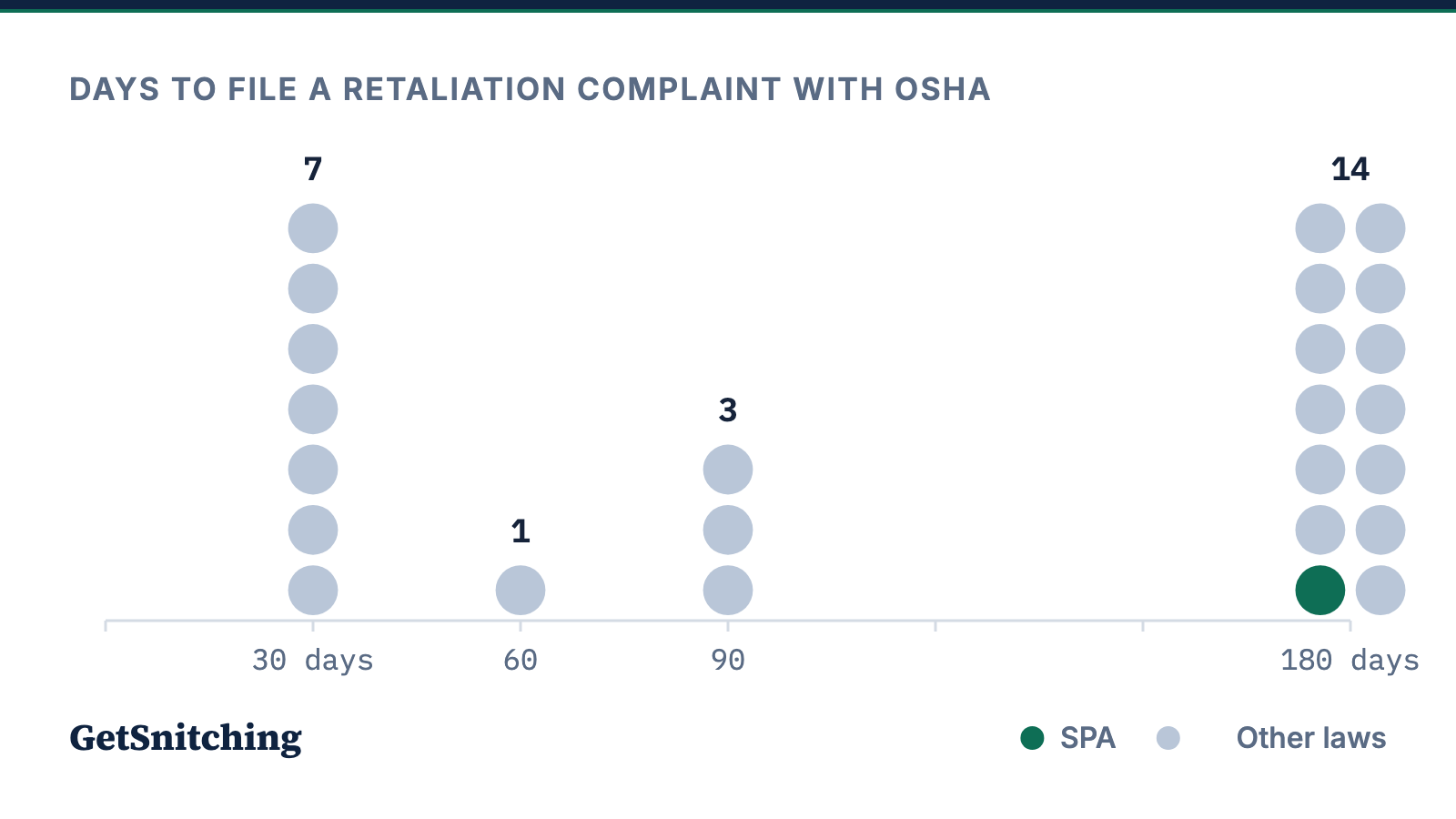
You have 180 days from the retaliatory act to file with OSHA. If you are at sea when the retaliation happens, the clock still runs; a complaint can be made by phone or online when you have connectivity, and it does not need to be on a special form.
Procedure
The SPA uses the “contributing factor” causation standard. OSHA can order preliminary reinstatement. You can request findings after 60 days, and if there is no final Labor Department decision within 210 days of filing, you can take the case to federal district court. Either party has 30 days to object to OSHA’s findings and request a hearing before an administrative law judge.
Remedies
Reinstatement, back pay, compensatory damages, attorney’s fees, and punitive damages capped at $250,000.
Related laws
Port workers who report unsafe cargo containers are covered by the International Safe Container Act, which has a much shorter 60-day deadline. Pollution from vessels can also involve the Act to Prevent Pollution from Ships, under which courts can award informants up to half of a criminal fine. For the OSHA filing process, see the OSHA program page.
Other laws on the same 180-day clock
If your facts also touch one of these, the deadline is the same, but coverage and remedies differ.
- Affordable Care Act, Section 1558 (Fair Labor Standards Act Section 18C) (ACA)
- Criminal Antitrust Anti-Retaliation Act (CAARA)
- Consumer Financial Protection Act of 2010, Section 1057 (CFPA)
- Consumer Product Safety Improvement Act, Section 219 (CPSIA)
- Energy Reorganization Act of 1974, Section 211 (ERA)
- Federal Railroad Safety Act (FRSA)
- FDA Food Safety Modernization Act, Section 402 (FSMA)
- Moving Ahead for Progress in the 21st Century Act, Section 31307 (MAP-21)
- National Transit Systems Security Act (NTSSA)
- Pipeline Safety Improvement Act (PSIA)
- Sarbanes-Oxley Act of 2002, Section 806 (SOX)
- Surface Transportation Assistance Act (STAA)
- Taxpayer First Act (TFA)
Related reading
Compare all 25 OSHA whistleblower laws
Not legal advice
GetSnitching explains programs and processes in plain English from official sources. Whistleblower and reporting decisions can carry real legal risk. For advice about your situation, talk to a licensed attorney. Many whistleblower attorneys offer free consultations.
Official sources
Cite this page