False Claims Act statute of limitations: the 6-year, 3-year, and 10-year rules
Verified against official sources:
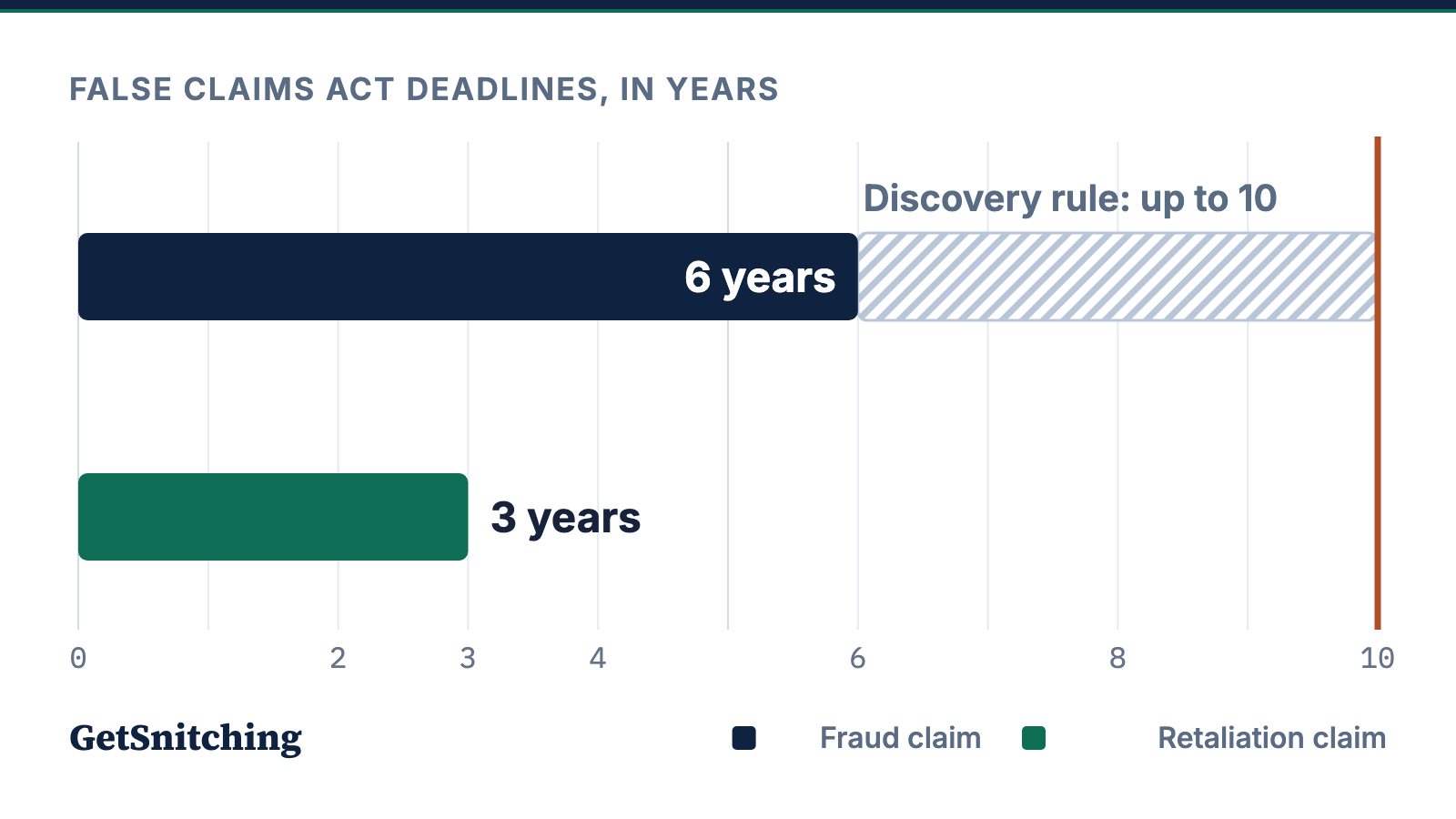
The False Claims Act gives whistleblowers more time than most laws, but not unlimited time, and two different clocks apply depending on whether you are suing over the fraud or over retaliation against you. Here is what the statute says.
The fraud claim: section 3731(b)
Under 31 U.S.C. 3731(b), a civil action under the False Claims Act may not be brought:
- more than 6 years after the date the violation was committed, or
- more than 3 years after the date when facts material to the claim were known, or reasonably should have been known, by the U.S. official responsible for acting, but in no event more than 10 years after the violation,
whichever of those occurs last.
In practice, the 6-year period is the one to plan around. The 3-year rule can extend the deadline when the government did not know about the fraud, but it runs from what a government official knew or should have known, which you usually cannot see from the outside. Do not count on it.
Each false claim is its own violation, so a long-running scheme has a rolling window: the oldest claims fall outside the deadline first.
When the government joins
If the government intervenes, section 3731(c) lets it file its own complaint or amend yours, and for limitations purposes its claims relate back to the date you filed, to the extent they arise from the conduct you described. That is one reason filing early protects the whole case.
The retaliation claim: section 3730(h)(3)
If you were fired, demoted, or punished for investigating or reporting fraud, your retaliation claim under section 3730(h) has a separate deadline: it may not be brought more than 3 years after the date the retaliation occurred.
The first-to-file problem
Deadlines are not the only reason to move fast. Only the first whistleblower to file on a given fraud can usually proceed; see the first-to-file rule.
What to do
Talk to a qui tam lawyer as soon as you have a clear picture of the fraud. Most work on contingency, and the statute requires the defendant to pay a winning relator’s reasonable attorney’s fees; see who pays a whistleblower’s lawyer. Our qui tam guide explains the process, and state false claims acts can add state claims.
Not legal advice
GetSnitching explains programs and processes in plain English from official sources. Whistleblower and reporting decisions can carry real legal risk. For advice about your situation, talk to a licensed attorney. Many whistleblower attorneys offer free consultations.