How to submit a fraud tip at america.gov/fraud (and make it reward-eligible)
Verified against official sources:
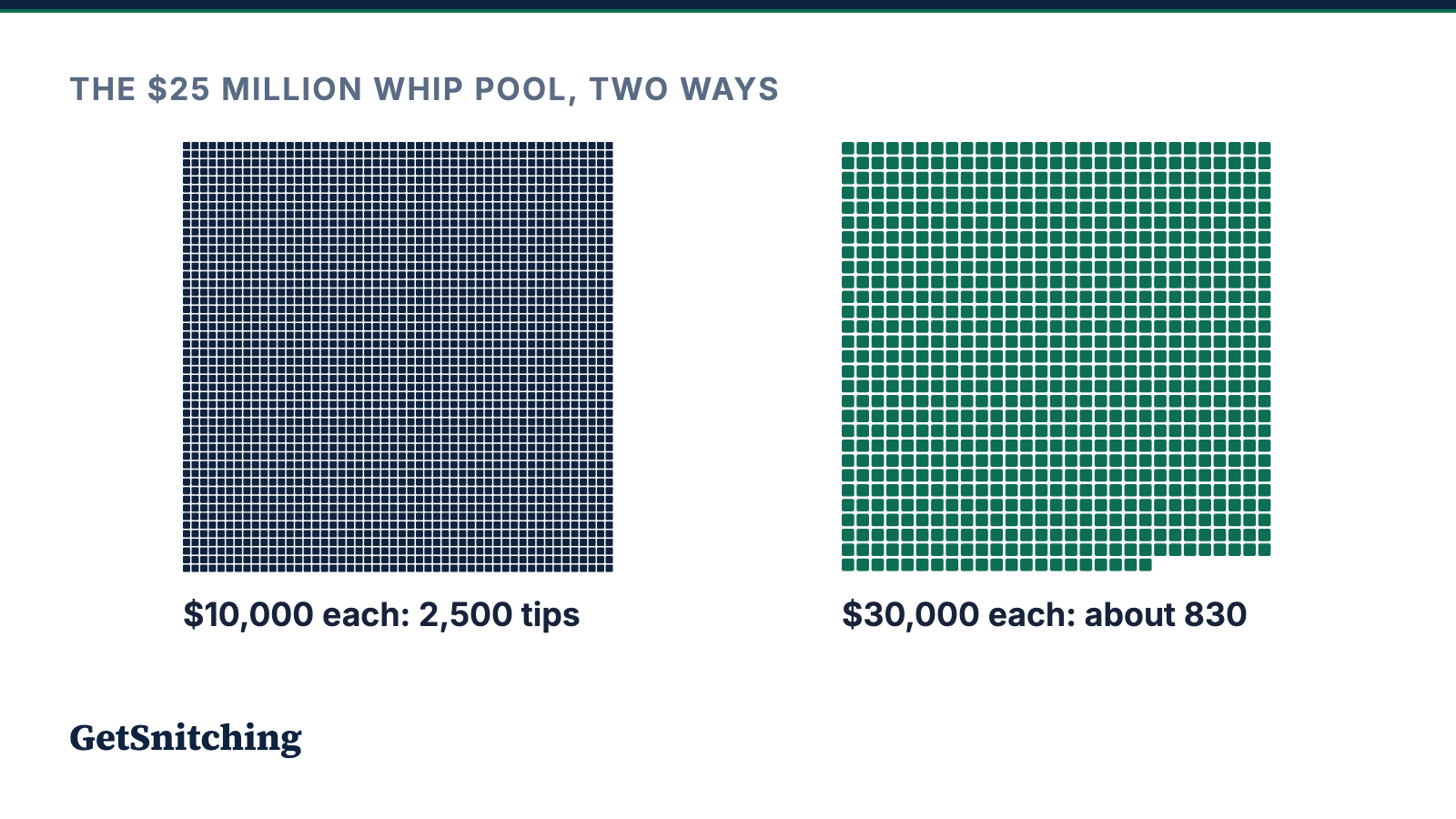
The federal government’s fraud tip line is now a single web form at america.gov/fraud, run by the Task Force to Eliminate Fraud, and as of October 20, 2026 it is also the only preferred route into the DOJ Fraud Rewards Program, which pays $10,000 to $30,000 when a tip leads to criminal charges. The form is short. Whether your tip can ever be paid depends on a few choices you make while filling it in. Here is what it asks, in order, and what each answer does. If you would rather answer a few questions and get finished text for every field, our free Fraud Tip Builder does that in your browser without sending us anything.
Since late October the address america.gov/fraud opens a short chooser first: pick “Report benefits fraud” (it covers Medicaid, Medicare, SNAP, unemployment, and other federal programs), which takes you to america.gov/benefits-fraud. The other option on the chooser is for voter fraud, which the reward program does not cover.
Before you open the form
Check the subject area. Rewards attach only to tips about health care fraud and fraud on programs run by Agriculture, Labor, HHS, HUD, Education, Veterans Affairs, War, and the SBA. The portal accepts any fraud report and routes it to the right office, so you can still report a bank scam or a stolen identity here, but no reward will follow. Non-fraud crimes do not belong on the form at all; DOJ’s FAQ sends those to local police or the FBI’s Internet Crime Complaint Center.
Gather specifics. DOJ’s FAQ says the Department wants tipsters to identify the specific violation, the subjects, and the source of your information. Before you type anything, write down names and business names, addresses, dates or date ranges, the program or payer involved (Medicare, Medicaid, SNAP, a state unemployment agency, a HUD voucher, a Pell grant), roughly how much money, and how you know. If you have documents, get them onto the device you will file from.
Decide about your name. The portal says your name is optional. The reward terms say you must be identified and verified before any payment, and that the only anonymous route is through an attorney who certifies the submission. If you want to be eligible for a reward and you are filing on your own, include your contact information.
Step 1: tell us what happened
A single free-text box asks you to describe what happened in a few sentences: what you saw, who was involved, and when. Treat it as the summary a prosecutor reads first. Lead with the scheme in one sentence (“A home health agency in [city] is billing Medicare for nursing visits to patients it does not see”), then who, then the time period, then how you know. Plain language beats legal language. Do not speculate about charges or statutes; that is their job.
Two of the reward program’s tests are decided by what you write here. Originality means the information comes from your own knowledge or your own analysis, not from a news story or a court filing, so say how you know. Specificity is what makes a tip actionable; the FAQ warns that information must be specific as well as truthful and complete.
Step 2: review your report
The form expands your summary into five fields: what happened, who was involved, amount, supporting documents, and contact information. You can attach up to five documents or photos. Prioritize evidence that shows the gap between what was claimed and what was real: a billing statement for a service you never received, a meal count sheet against a sign-in log, a schedule against a timesheet, a text message setting up the scheme. Screenshots are fine. Do not attach anything you obtained by breaking into a system or an account; the terms say illegally obtained information is ineligible and submitting it gives you no protection from prosecution.
The amount field can be an estimate or a range. There is no minimum loss for a reward, so a small or even unsuccessful scheme still qualifies if it leads to charges.
Step 3: confirmation and reference number
You get a reference number and a download button for a copy of your report. Save both. The portal says the report is encrypted, goes straight from your browser to the Treasury Department, and that america.gov itself keeps nothing. Treasury reviews it and routes it to the office best placed to act, which for reward-eligible tips means the Fraud Division. DOJ’s FAQ says Fraud Division staff review portal submissions and that you may or may not be contacted for more information.
After you submit
Expect silence for a while. The reward is triggered when DOJ obtains and unseals an indictment, information, or complaint, and the Department says it contacts eligible tipsters soon after that. Nothing is paid while charges are sealed. If you are contacted, cooperation, including documents and testimony if asked, is a condition of the reward.
Do not report the same facts through a second channel hoping to double your odds. The FAQ says DOJ may deny an award solely because a tip arrived some other way, and the terms say that where two people submit identical information only the first is eligible. If you already called an agency hotline before the program existed, file again through the portal and note the earlier report in your description.
If the fraud is large and you are an insider with documents, pause before you submit. A tip that leads to a public indictment can affect a later False Claims Act case, where the reward is a percentage rather than a flat $30,000. WHIP versus qui tam explains the sequencing, and how to report fraud anonymously covers what anonymity means on each channel.
A note on the form itself
The portal belongs to the Task Force to Eliminate Fraud and is built by the General Services Administration’s National Design Studio; it is not a DOJ page, and its reward language (“if you include your contact info and your report leads to criminal charges or recovering money stolen by fraudsters, you may be eligible for an award”) is broader than DOJ’s terms, which pay on criminal charges in covered areas only. When the two differ, the DOJ terms govern the reward. We check both pages on the schedule shown at the top of this guide and note changes with a date.
Not legal advice
GetSnitching explains programs and processes in plain English from official sources. Whistleblower and reporting decisions can carry real legal risk. For advice about your situation, talk to a licensed attorney. Many whistleblower attorneys offer free consultations.
Official sources
- Report fraud, waste, or abuse (America.gov, Task Force to Eliminate Fraud)
- Report benefits fraud (America.gov)
- Fraud Division Rewards Program, Frequently Asked Questions (DOJ)
- Fraud Division Rewards Program, External Guidance Terms and Conditions (DOJ)
- Whistleblower Rewards Program (DOJ National Fraud Enforcement Division)