Does the EPA pay whistleblower rewards? Only in rare cases
Verified against official sources:
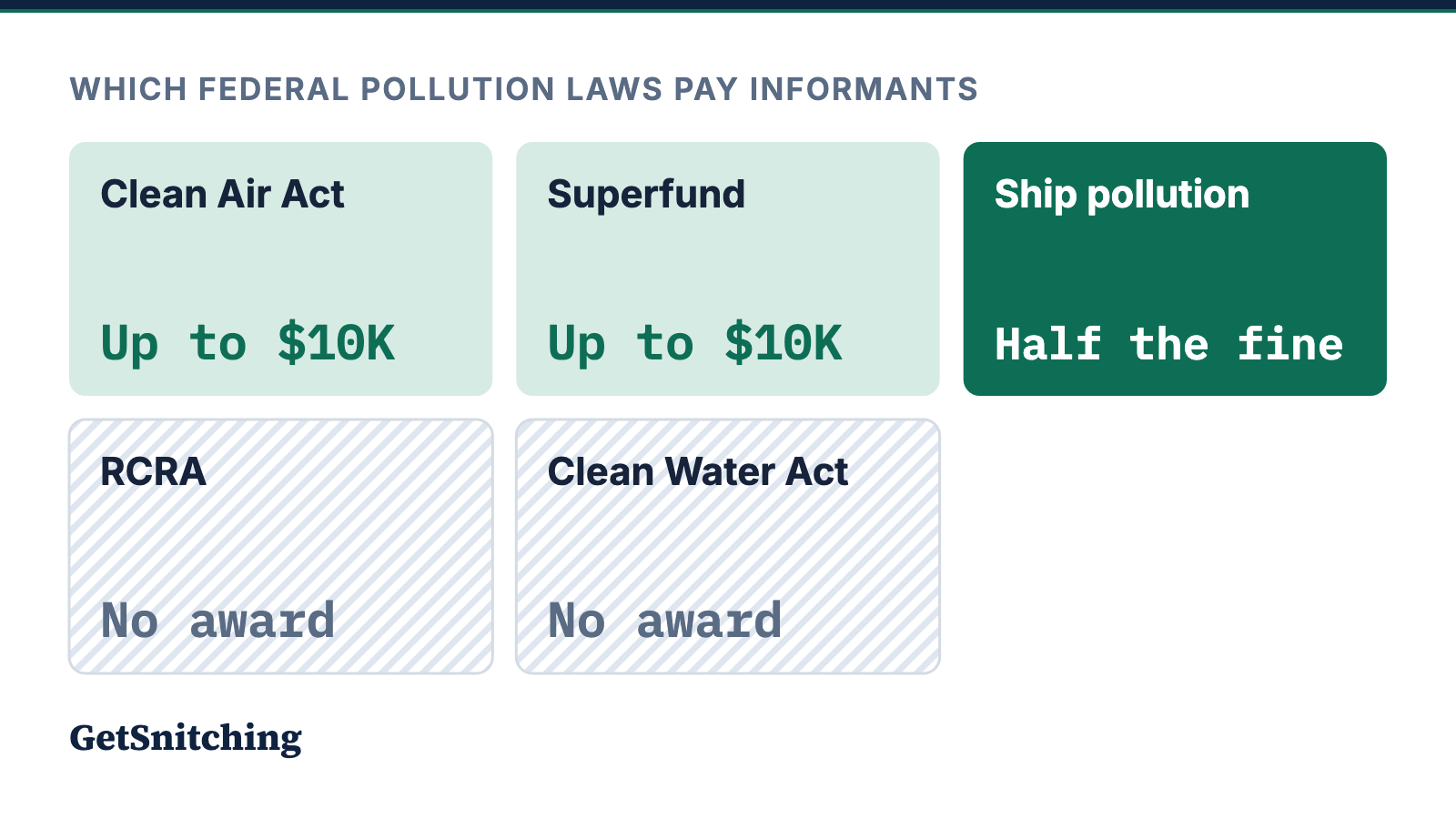
The EPA does not run a whistleblower reward program like the SEC’s or the IRS’s. There is no form to claim a percentage of a pollution fine. But three federal laws do allow money to be paid to people whose information leads to enforcement, and one of them can pay a great deal. Here is what each says, read from the statutes themselves.
The Clean Air Act: up to $10,000
Section 7413(f) of the Clean Air Act lets the EPA Administrator pay an award of up to $10,000 to a person who furnishes information or services leading to a criminal conviction or a judicial or administrative civil penalty for certain Clean Air Act violations. The award is discretionary and subject to available appropriations. Federal, state, and local government employees who provide the information as part of their official duties are not eligible.
CERCLA (Superfund): up to $10,000
Section 9609(d) of the Superfund law allows an award of up to $10,000 to anyone who provides information leading to the arrest and conviction of a person for a criminal violation of CERCLA, such as failing to report a release of a hazardous substance. It is also discretionary, and it applies only to criminal convictions.
Ship pollution: up to half the fine
The Act to Prevent Pollution from Ships is the exception that can pay real money. Under 33 U.S.C. 1908(a), a court may award up to half of a criminal fine to the person whose information led to the conviction. Under section 1908(b), up to half of a civil penalty may be paid to the person whose information led to the penalty. The law implements the international MARPOL convention on pollution from ships, so it reaches illegal discharges from vessels.
What about RCRA and the Clean Water Act?
Despite what some summaries say, the hazardous waste law (RCRA) has no informant award provision, and neither does the Clean Water Act. We checked the statutes.
A city law that does pay: idling trucks in New York
The place where ordinary people are paid for reporting air pollution is a city, not the EPA. New York City makes it illegal to idle a vehicle for longer than three minutes, or more than one minute next to a school or park, and its Citizens Air Complaint Program lets any person file a sworn video complaint against an idling truck or bus. When the penalty is collected, Local Law 58 of 2018 says the city’s hearings office “shall award the complainant, out of the proceeds collected, twenty-five percent of such proceeds.” The award depends on the summons being upheld and paid, so it can take months. Dashcam Bounty’s step-by-step guide to the NYC idling bounty covers what the video has to show and how often contested cases are upheld.
How to report
Pollution violations are reported to EPA through the ECHO violation reporting form, which does not require your contact information; see how to report an environmental violation. For an emergency release, call 911 and the National Response Center at 1-800-424-8802. Our EPA whistleblower protection page covers the reporting process and how to file a retaliation complaint.
Protect yourself first
If you report your own employer, six environmental laws protect you from retaliation, but only if you file with OSHA within 30 days. See the Clean Air Act, Clean Water Act, and the other laws in our protections table.
When pollution fraud pays more
If a company lied about environmental compliance to win or keep a federal contract, a False Claims Act qui tam case can pay 15 to 30 percent of the recovery, far more than these awards.
Not legal advice
GetSnitching explains programs and processes in plain English from official sources. Whistleblower and reporting decisions can carry real legal risk. For advice about your situation, talk to a licensed attorney. Many whistleblower attorneys offer free consultations.
Official sources
- 42 U.S.C. 7413, Clean Air Act enforcement (awards at 7413(f))
- 42 U.S.C. 9609, CERCLA civil penalties and awards (9609(d))
- 33 U.S.C. 1908, Act to Prevent Pollution from Ships penalties
- Report Environmental Violations (EPA ECHO)
- NYC Local Law 58 of 2018, citizen idling complaints (complainant award at Admin. Code 24-163)
- Citizens Air Complaint Program (NYC Department of Environmental Protection)