Does the SEC pay whistleblowers? Yes, 10% to 30% of sanctions
Verified against official sources:
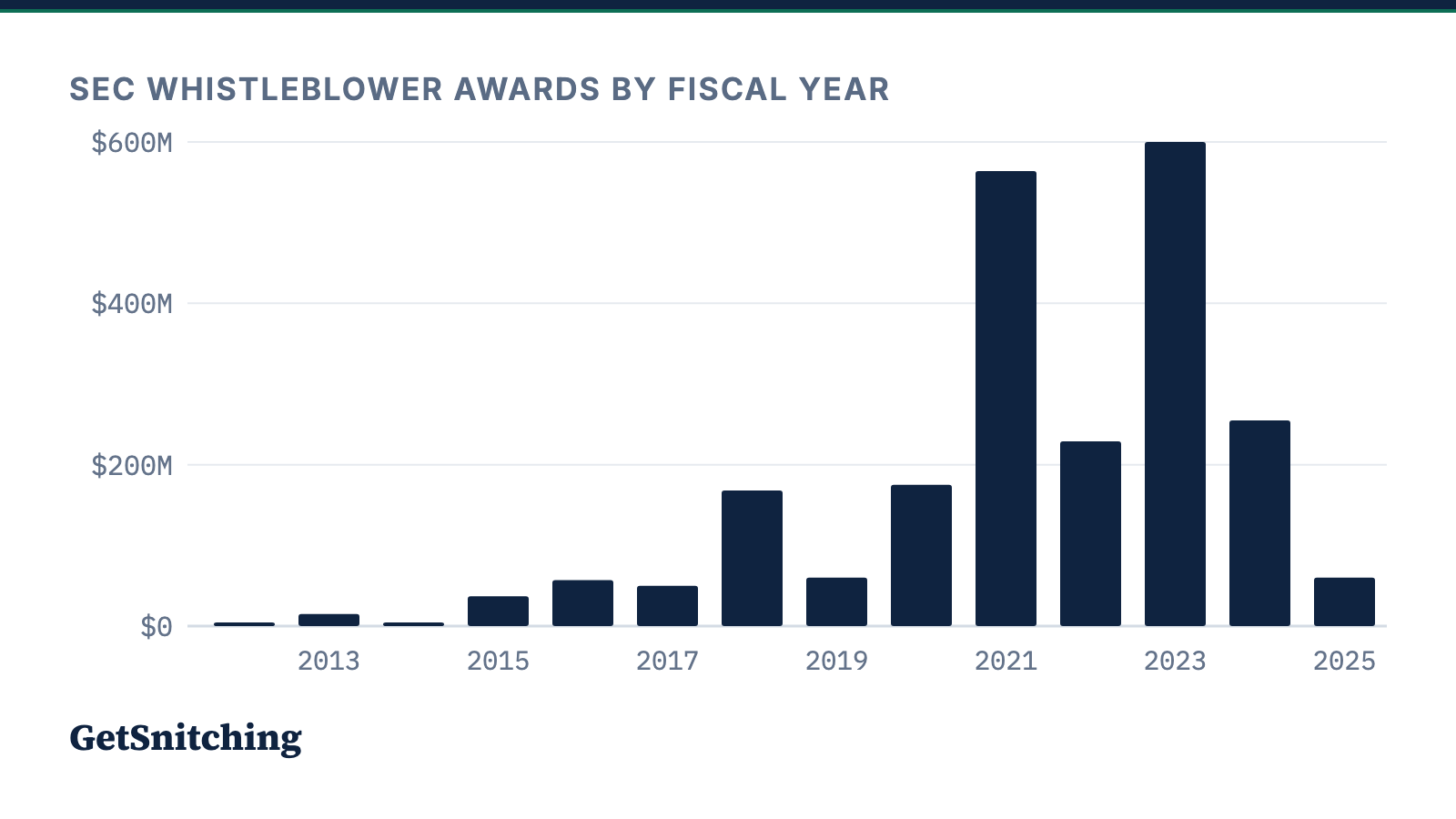
Yes. The Securities and Exchange Commission pays people whose tips lead to a successful enforcement case. The law requires an award of 10 to 30 percent of the money collected, but only when the case ends in monetary sanctions of more than $1 million. In fiscal year 2025 the SEC awarded more than $60 million to 48 people. It also received about 27,000 whistleblower tips that year, so a paid award is the exception, not the usual result.
What the law says the SEC pays
The program comes from 15 U.S.C. 78u-6, added by the Dodd-Frank Act in 2010. In its words, the SEC “shall pay” an award to whistleblowers who “voluntarily provided original information” that “led to the successful enforcement” of a covered action. Four conditions sit inside that sentence.
- More than $1 million. A covered action is an SEC case that results in monetary sanctions exceeding $1,000,000. Below that, there is no award.
- Collected, not ordered. The 10 to 30 percent is measured against what has been collected. The SEC’s fiscal year 2025 report describes one approved award where no payment was issued because nothing had been collected yet.
- Voluntary. The SEC denies a claim if you sent your information after the SEC or another listed authority had already asked you about the same subject.
- Original. The information has to come from your own knowledge or analysis, and the SEC must not already have it from someone else.
If more than one person qualifies in the same case, the 10 to 30 percent is the total for all of them. Where each award lands inside the range is up to the SEC. Its fiscal year 2025 report describes a presumption of the full 30 percent when the largest possible award would be $5 million or less and the claim has no negative factors, such as an unreasonable delay in reporting.
Awards are paid from the SEC’s Investor Protection Fund, which is filled by sanctions collected from violators.
Who cannot get an award
The statute bars an award to anyone who:
- Was a member, officer or employee of a regulatory agency, the Justice Department, a self-regulatory organization, the Public Company Accounting Oversight Board, or a law enforcement organization when they got the information.
- Is convicted of a crime related to the case.
- Got the information by auditing a company’s financial statements, where reporting it would break the audit rules.
- Does not submit the information in the form the SEC requires.
The SEC’s own FAQ adds that a company or organization cannot be a whistleblower, and that you do not have to work for the company you report.
What the SEC actually paid
These are the SEC’s own figures for fiscal year 2025, which ended September 30, 2025:
- More than $60 million awarded to 48 individuals, in 31 covered actions.
- About 27,000 whistleblower tips received. The SEC says roughly 12,000 of them came from just two people.
- Final orders denying awards to 275 individuals.
Our award tracker lists the totals by year. No past award tells you what a new tip will pay.
How to report
Tips go on Form TCR. The SEC takes it through its online Tips, Complaints and Referrals portal, or by mail or fax to the Office of the Whistleblower; the current address is on the SEC’s tip submission page. To be eligible for an award you must complete the whistleblower declaration at the end of the form.
You may file without giving your name. If you do, the SEC says you must be represented by an attorney, and give the attorney’s contact information, to be eligible for an award. The statute also requires you to reveal your identity to the SEC before any award is paid. See do you need a whistleblower lawyer.
Filing a tip is not a claim for money. When a case ends with sanctions over $1 million, the SEC posts a Notice of Covered Action on its website. You then have 90 calendar days to file Form WB-APP, so watch the notices yourself. Our SEC process timeline walks through each step, and the SEC whistleblower program page explains the eligibility rules in detail.
Protect yourself first
The same statute makes it illegal for an employer to fire, demote, suspend, threaten or harass a whistleblower for reporting to the SEC. You can sue in federal court. The relief is reinstatement, two times back pay with interest, and attorney fees. The suit must be filed within six years of the retaliation, or within three years of when you knew or should have known the key facts, and never more than ten years after.
One condition is easy to miss. The SEC says this protection applies to people who report possible violations to the Commission in writing before the retaliation happens. If you only reported inside the company, look at Sarbanes-Oxley instead, which covers internal reports at public companies and has a 180-day deadline to file with OSHA.
If your information is about futures, swaps or commodities and not securities, see does the CFTC pay whistleblowers.
Not legal advice
GetSnitching explains programs and processes in plain English from official sources. Whistleblower and reporting decisions can carry real legal risk. For advice about your situation, talk to a licensed attorney. Many whistleblower attorneys offer free consultations.
Official sources
- 15 U.S.C. 78u-6, securities whistleblower incentives and protection
- SEC Whistleblower Program
- SEC Office of the Whistleblower, Annual Report to Congress for Fiscal Year 2025 (Feb. 11, 2026)
- Information About Submitting a Whistleblower Tip (SEC, updated Aug. 6, 2026)
- Whistleblower Frequently Asked Questions (SEC, updated Oct. 29, 2026)
- Whistleblower Protections (SEC, updated Oct. 20, 2026)