Who investigates Medicaid and Medicare fraud, and what happens after you report
Verified against official sources:
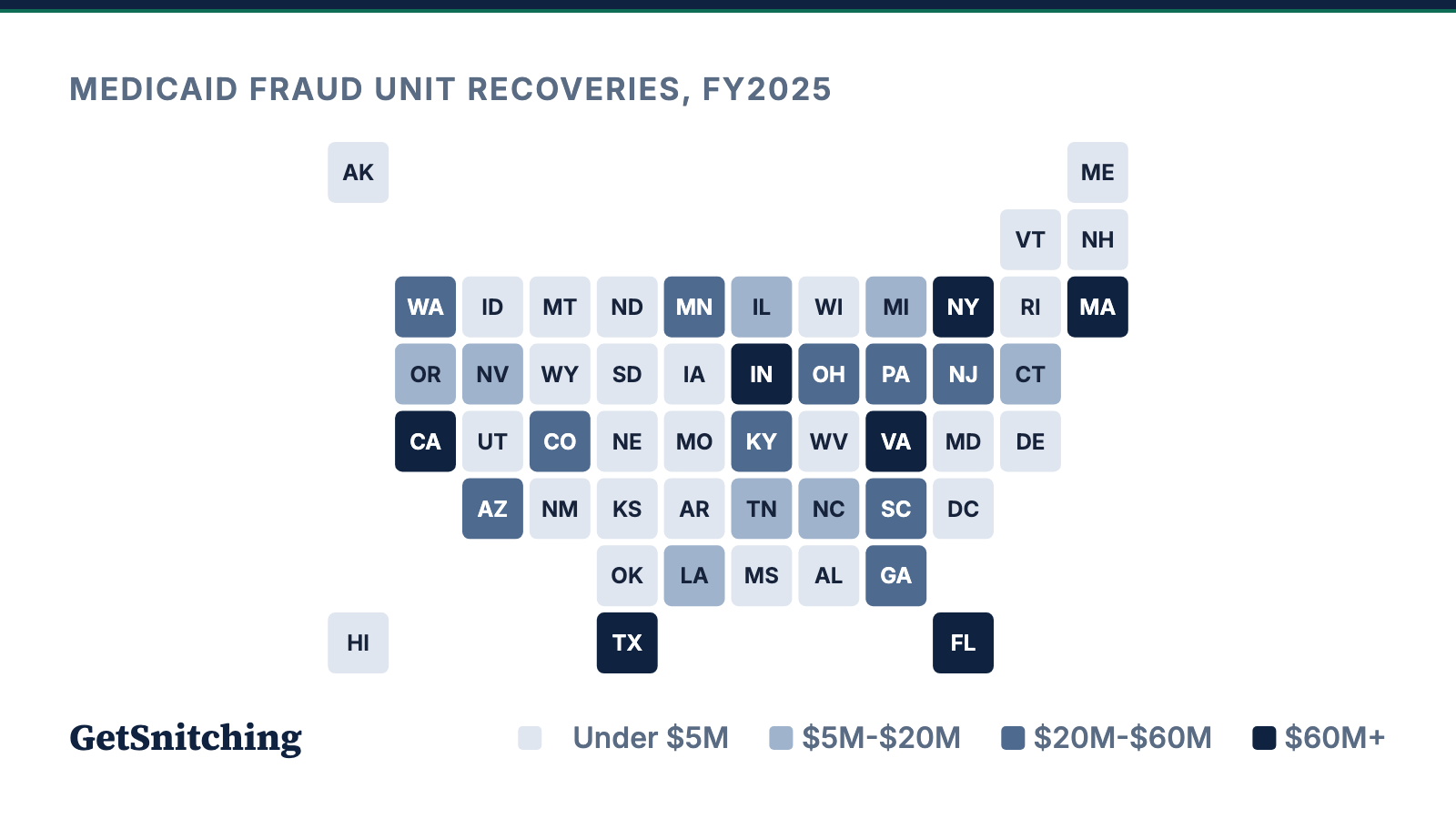
Medicaid fraud by doctors, clinics, pharmacies, home health agencies, and other providers is investigated and prosecuted mainly by each state’s Medicaid Fraud Control Unit, known as an MFCU. Medicare fraud goes to the HHS Office of Inspector General, which also oversees the state units. Here is who handles what, where to report, what happens after you do, and how to read the recovery numbers each unit publishes.
Medicaid: your state’s Medicaid Fraud Control Unit
HHS-OIG describes MFCUs as units that investigate and prosecute Medicaid provider fraud, as well as abuse or neglect of residents in health care facilities and board and care facilities, and of Medicaid enrollees in other settings. They operate in all 50 states, the District of Columbia, Puerto Rico, and the U.S. Virgin Islands.
Most sit inside the state attorney general’s office. Each employs teams of investigators, attorneys, and auditors, and federal rules require them to be separate and distinct from the state Medicaid agency that pays claims. HHS-OIG recertifies each unit every year, reviews its performance, and administers the federal grant that pays a portion of its costs.
MFCUs focus on providers. Fraud by a person receiving Medicaid, such as lying about income to qualify, is usually handled by the state Medicaid agency or another state office. Each of our state Medicaid fraud pages explains where to go.
Medicare, and the federal investigators
HHS-OIG and the Justice Department investigate Medicaid fraud too, especially large or multistate schemes, because the federal government pays a large share of Medicaid. Medicare fraud runs through HHS-OIG’s hotline, at 1-800-HHS-TIPS or online. If you cannot tell whether a program is Medicare or Medicaid, that hotline takes reports about both.
How to report, and what makes a tip useful
Report Medicaid provider fraud to your state’s unit, using the contact on your state’s page. Report Medicare fraud, or anything you cannot place, to 1-800-HHS-TIPS.
HHS-OIG says its investigations succeed most often when the complaint includes as much information as possible:
- the name and contact information of the provider or business involved, including addresses, phone numbers, and email addresses if you have them;
- the name and contact information of anyone who can corroborate what you are reporting; and
- supporting evidence you can upload, such as emails, documents, billing records, or photographs.
If you are a patient, your Medicare Summary Notice or Explanation of Benefits showing a service you never received is a strong starting point; how to report telehealth and billing fraud shows how to read it and what to send.
What happens after you report
Often, from your side, nothing seems to happen. That is normal, and it does not mean your report was ignored. HHS-OIG says its hotline accepts tips from all sources and reviews and investigates thousands of complaints a year. It is also candid that not every submission results in an investigation, and that because of the volume, it cannot contact every complainant. Silence is the usual outcome even for useful tips.
Investigations, when they happen, take time. They can involve analyzing billing data across many patients, interviewing staff, and coordinating with the Justice Department, and you will generally not be told what is happening while they are open.
How much the state units do
Every year HHS-OIG publishes each unit’s results. Across the 50 states and D.C., units obtained 1,180 convictions and reported nearly $2 billion in recoveries in fiscal year 2025, with wide differences between states. Our state Medicaid fraud pages show each unit’s investigations, indictments, convictions, recoveries, and staffing, compared with the year before, and our national comparison puts them side by side.
HHS-OIG’s chart cautions that recoveries are amounts defendants are required to pay, which may not reflect what is actually collected, and that recoveries may involve cases with other federal and state agencies.
Global settlements, and why state recoveries swing
Part of a state unit’s recovery total may have little to do with cases the unit built itself. National civil settlements negotiated with many states at once, called global settlements, account for a large share of some units’ recoveries.
HHS-OIG’s annual MFCU statistical chart defines global recoveries as those deriving from civil settlements or judgments involving the U.S. Department of Justice and a group of state units, facilitated by the National Association of Medicaid Fraud Control Units. In other words, a national case, often against a drug maker or a large health care company, is resolved once, and the money is divided among the states whose Medicaid programs were affected.
Because a single national settlement can land in many states in the same year, a state’s total recoveries can jump or drop sharply without any change in the unit’s own work. Our state pages flag this directly: when more than half of a state’s fiscal 2025 recoveries came from global settlements, the page says the total reflects national settlements more than cases the unit built alone. In some states, every dollar of recoveries in fiscal 2025 came from global settlements.
Convictions and indictments come from cases a unit pursues itself, so they say more about its own activity than total recoveries do. Each state page compares fiscal 2025 convictions with fiscal 2024 and ranks fraud convictions among the 51 state and D.C. units, with ties labeled.
When a report can pay
A hotline report does not earn a reward. If you have inside knowledge of fraud, such as from working in a provider’s billing office, a qui tam lawsuit under the False Claims Act can pay 15 to 30 percent of what the government recovers, and state false claims acts can pay a whistleblower too. Health care made up more than $5.7 billion of the $6.89 billion the government recovered under the False Claims Act in fiscal year 2025. A qui tam case is filed by a lawyer under seal, separate from the hotline; see our qui tam guide.
Not legal advice
GetSnitching explains programs and processes in plain English from official sources. Whistleblower and reporting decisions can carry real legal risk. For advice about your situation, talk to a licensed attorney. Many whistleblower attorneys offer free consultations.